NSE Stock Investing for Beginners: The Complete Step-by-Step Guide for Kenyans (2026)
how to buy your first shares on the NSE in Kenya. A step-by-step 2026 guide on opening a CDS account, choosing stocks, and using AI tools.
Every time you use M-Pesa, buy Tusker, or walk past an Equity Bank branch, you are looking at companies that everyday Kenyans own a piece of.
Not the executives. Not the board. Ordinary Kenyans who decided to buy shares and became part-owners of some of the most profitable businesses on the continent.
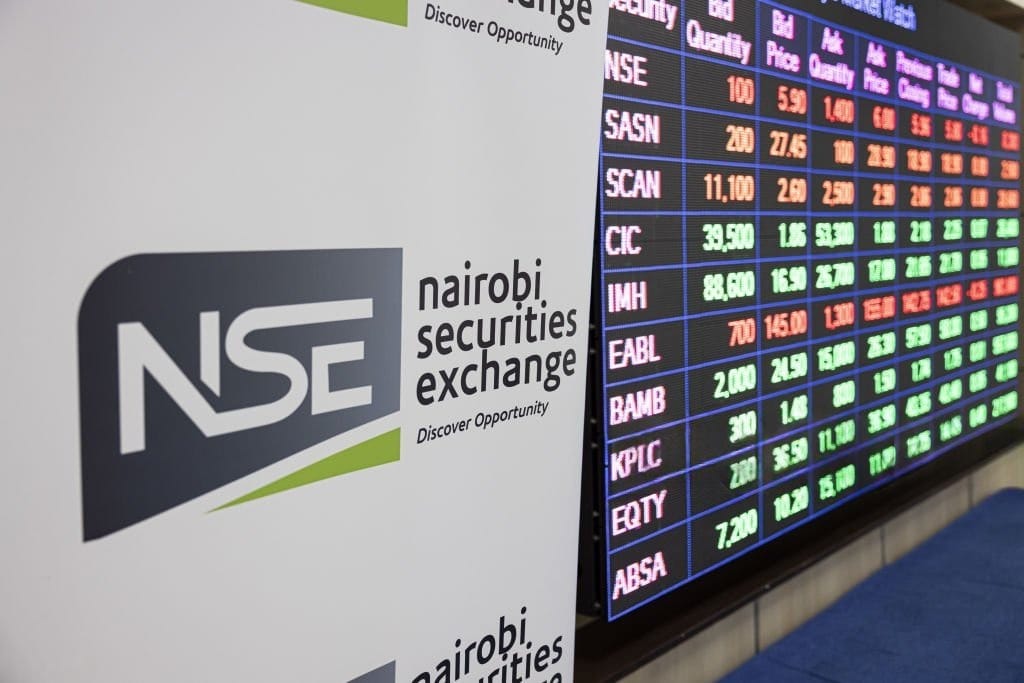
That is what the Nairobi Securities Exchange (NSE) makes possible. It is Kenya's stock market, the place where ownership stakes in publicly listed companies are bought and sold. And despite being one of Africa's most established stock exchanges, with a history stretching back to 1954, most Kenyans have never invested in it.
This guide is going to change that for you. By the end, you will understand exactly how the NSE works, how to open an account and buy your first shares, which companies to research as a beginner, how to use free AI tools to support your investment decisions, and the common mistakes that cause first-time investors to lose money, so you can avoid them.
✅ KEY TAKEAWAY: NSE stock investing is not a get-rich-quick strategy. It is a long-term wealth-building tool. Investors who hold quality stocks for 5, 10, or 20 years have historically built significant wealth. Investors who trade in and out trying to time the market typically do not. Before you invest a single shilling in stocks, you need a stable emergency fund and at least a basic money market fund investment in place.
1. What Is the NSE and How Does It Work?
The Nairobi Securities Exchange is the formal marketplace where shares of publicly listed Kenyan companies are bought and sold. When a company 'lists' on the NSE, it offers a portion of its ownership to the public in exchange for capital to grow the business. Each unit of ownership is called a share.When you buy a share of Safaricom, for example, you become a part-owner of Safaricom and are entitled to a proportional share of its profits (paid as dividends) and a proportional gain or loss in the value of your stake as the company grows or shrinks.
The key numbers about the NSE in 2026:
- Over 60 companies listed across multiple sectors from banking, telecoms, manufacturing, agriculture, insurance, and more
- Trading happens Monday to Friday, 9:30 AM to 3:00 PM EAT
- The NSE 20 Share Index tracks the performance of the top 20 companies by various criteria
- The NASI (NSE All Share Index) tracks all listed companies
- Prices are quoted in Kenyan shillings per share
- Settlement is T+3 when you buy, the shares land in your account 3 business days later
Two ways to make money from NSE stocks:
Capital gains
If you buy a share at KSh 30 and it rises to KSh 45, you have made a capital gain of KSh 15 per share which is a 50% return. Capital gains on NSE stocks are currently exempt from capital gains tax in Kenya, making them attractive from a tax perspective.
Dividends
Many NSE-listed companies distribute a portion of their annual profits to shareholders as dividends are typically paid once or twice per year. Dividend income is subject to 5% withholding tax for Kenyan residents. A company paying KSh 2 per share in dividends on a stock trading at KSh 30 has a dividend yield of 6.7%.
📊 BY THE NUMBERS: The NSE has delivered significant long-term returns for patient investors despite short-term volatility. Between 2010 and 2020, the NSE All Share Index produced average annual returns that, over the full period, outperformed bank savings accounts,though with significantly more volatility year to year.
2. Before You Buy Your First Share - The Foundation You Need
Most guides jump straight to buying stocks. This guide will not do that, because the most common reason Kenyan beginners lose money in the stock market is not bad stock picks. It is investing money they needed for something else, being forced to sell when prices are down.
Before putting a single shilling into NSE stocks, confirm you have the following:
- An emergency fund of 3–6 months of expenses held in a money market fund or savings account that you can access within 3 business days. See: Money Market Funds in Kenya: The Complete 2026 Guide.
- Zero high-interest debt - mobile loans, credit card debt, or any borrowing above 15% annual interest should be cleared before stock investing. The NSE historically returns 10-18% annually over long periods, but not every year and high-interest debt is a certain cost.
- A monthly surplus - you should only be investing money you genuinely do not need for at least 3–5 years. Stock prices fluctuate, and being forced to sell during a dip is the most reliable way to lose money in the stock market.
- Basic financial literacy by understanding what a share is, how dividends work, and how to read a basic company earnings report. This guide covers the essentials, and our AI for Personal Finance guide shows you how to go deeper using free tools.
⚠️ IMPORTANT: NSE stock investing involves real risk. Share prices can fall significantly — companies can have bad years, sectors can decline, and the overall market can drop during economic downturns. Unlike money market funds, there is no guaranteed return. Never invest money you cannot afford to lose or cannot leave invested for several years.
3. How to Open an Account and Buy Your First NSE Shares
The process of buying NSE shares requires two things: a CDS account (where your shares are held) and a stockbroker account (through which you place buy and sell orders). Modern platforms combine both into a single registration process.
Step 1 - Choose your platform
Below is a comparison of the main platforms available to Kenyan retail investors in 2026:
| Platform | Type | Min. Investment | Best for | Access |
| ZiidiTrader | Digital investment product by Safaricom | 1 share | Beginners - mobile-first, simple UI | App |
| Genghis Capital | Full-service broker | KSh 10,000 | Investors wanting research support | App / Web / Branch |
| Standard Investment Bank | Full-service broker | KSh 10,000 | Larger portfolios, IPO access | Web / Branch |
| AIB-AXYS Africa | Full-service broker | KSh 50,000 | Experienced investors | Branch / Web |
| Old Mutual Securities | Full-service broker | KSh 10,000 | Long-term wealth-focused investors | App / Web |
For most beginners, Ziidi Trader is the recommended starting point. It has the lowest minimum investment 1 share, the simplest mobile interface, and is designed specifically for first-time investors. You can always open additional accounts with full-service brokers as your portfolio grows.

Step 2 - Open your account
- Open the App: Launch the M-PESA Super App on your phone.
- Find the Mini-App: Tap on the Services tab at the bottom, or look under Financial Services.
- Select Ziidi Trader: Tap the Ziidi Trader icon.
- Accept Terms: Read and accept the Terms and Conditions.
- Verify Identity: The app will auto-fill your M-PESA details; confirm they are correct.
- Complete KYC: Answer a few quick profiling questions (e.g., your source of funds or employment type).
- Enter PIN: Confirm the registration using your M-PESA PIN
Step 3 - Place your first buy order
- Browse Market: View the live list of companies on the Ziidi dashboard.
- Select Stock: Tap on the specific stock you want to buy (e.g., Safaricom, Equity Bank).
- Enter Amount: Input the number of shares you want to buy (minimum 1 share).
- Confirm Cash: Ensure your M-PESA balance covers the share cost plus the 1.5% transaction fee.
- Authorize: Tap Buy and enter your M-PESA PIN to complete the trade.
💡 AI TIP: For your first order, buy a small amount even 1 shares of one company purely to experience the process. Go through the full journey: search, analyse, order, wait for settlement, see the shares in your account. The learning from doing it with a small amount is worth far more than reading about it. You can increase your investment as you gain confidence.
4. Which Companies Should a Beginner Research First?
This is the question every new investor asks and it is the right question to ask carefully. The companies below are examples that many Kenyan beginners research first, based on familiarity, market position, and dividend history. They are included here for educational purposes only.
⚠️ IMPORTANT: The companies listed below are examples for educational purposes. They are NOT recommendations to buy, sell, or hold any specific stock. Company performance changes. A company that has performed well historically may not continue to do so. Always research current financial statements, read recent analyst reports, and consult a CMA-licensed advisor before investing. Past performance does not guarantee future results.
| Company (Ticker) | Sector | Why beginners study it | Dividend history | Min. shares |
| Safaricom (SCOM) | Telecoms / Fintech | Kenya's largest company, M-Pesa cash flows, widely held | Consistent annual dividend | 1 share |
| Equity Bank (EQTY) | Banking | East Africa's leading bank, strong growth track record | Consistent annual dividend | 1 share |
| KCB Group (KCB) | Banking | Kenya's largest bank by assets, regional expansion | Consistent annual dividend | 1 share |
| EABL (EABL) | Consumer goods | Strong brand portfolio, long dividend history | Long dividend history | 1 share |
| Co-operative Bank (COOP) | Banking | SACCO-linked, strong retail presence | Regular dividend payer | 1 share |
| Bamburi Cement (BAMB) | Construction | Infrastructure play, regional exposure | Dividend history varies | 1 share |
| Stanbic Holdings (CFC) | Banking / Finance | Regional banking, good for diversification | Dividend varies | 1 share |
Why familiarity is a useful starting point and not an ending point
Beginner investors often do well starting with companies whose businesses they understand intuitively. If you use Safaricom every day, you have a basic sense of how the company makes money, how it is embedded in Kenyan life, and what might threaten or support its business. That familiarity is a starting point for research and not a reason to buy without further analysis.
Before investing in any company, you should be able to answer these basic questions:
- How does this company make money? What are its main revenue streams?
- Is it profitable? Has it been profitable consistently over the past 5 years?
- Does it pay dividends? What has the dividend been over the past 3 years?
- What are the main risks to this business in the next 2–3 years?
- At the current share price, is the stock cheap, fairly priced, or expensive relative to its earnings?
💡 AI TIP: Use this ChatGPT prompt to research any NSE-listed company: 'I am a Kenyan investor considering buying shares of [company name], listed on the Nairobi Securities Exchange. Please explain: how the company makes money, its main business risks, what P/E ratio means and how it helps evaluate whether a stock is expensive, and what questions I should ask before investing. Keep the explanation beginner-friendly.'
5. How to Read a Share Price - The Numbers That Matter
When you look up a stock on Sasa Invest or the NSE website, you will see several numbers. Understanding what they mean helps you make more informed decisions.
The key numbers explained:
Share price
The current cost of one share. This alone tells you very little how a share priced at KSh 5 is not necessarily cheaper than one priced at KSh 200. What matters is the relationship between the price and the company's earnings.
P/E Ratio (Price to Earnings Ratio)
The share price divided by the company's earnings per share. If a company earns KSh 3 per share and trades at KSh 30, its P/E ratio is 10. A lower P/E can indicate better value but always compare within the same sector, since different industries have different typical P/E ranges.
Dividend yield
Annual dividend per share divided by the current share price, expressed as a percentage. A stock trading at KSh 30 that pays KSh 2 in annual dividends has a 6.7% dividend yield. For income-focused investors, this is a key metric.
52-week high / low
The highest and lowest price the stock has traded at over the past 52 weeks. This gives you context for whether the current price is near historical highs (potentially expensive) or historical lows (potentially undervalued or in decline for a reason).
Market capitalisation
The total value of all the company's shares combined. Safaricom's market capitalisation makes it the largest company on the NSE. Larger companies are generally more stable but may grow more slowly than smaller ones.
Volume
How many shares were traded today. Low volume can mean it is hard to buy or sell quickly without affecting the price. High volume generally indicates strong market interest.
💡 AI TIP: Paste this prompt into ChatGPT: 'I am looking at [Company] on the Nairobi Securities Exchange. Its current P/E ratio is [X], dividend yield is [Y]%, and it is trading at [Z]% of its 52-week high. What does each of these numbers tell me about whether this stock might be fairly priced, undervalued, or overvalued? What other information should I look for?' Replace the brackets with the actual numbers you find.
6. How to Use AI Tools to Research NSE Stocks
Free AI tools will not tell you which stock to buy — and you should be sceptical of any source that claims to do that reliably. What AI tools do extraordinarily well is help you understand companies, interpret financial data, and ask better questions before making decisions.
Company research prompt
"I want to research [company name] listed on the Nairobi Securities Exchange before deciding whether to invest. Can you explain: 1) What business does this company operate and how does it make money? 2) What are the main factors that could help or hurt this company in the next 3 years? 3) What financial metrics should I look at in their annual report to assess financial health? 4) What questions should I ask a stockbroker about this company before buying?"
Portfolio building prompt
"I am a Kenyan investor aged [your age] with KSh [amount] to invest in NSE stocks for the first time. I already have a money market fund for short-term savings. I want to invest in stocks for the long term — at least 5 years. I am willing to accept medium risk. Please suggest how I might think about diversifying across different sectors on the NSE, and what criteria I should use to evaluate potential investments. Give me a framework, not specific stock recommendations."
Dividend analysis prompt
"Explain how dividend investing works on the Nairobi Securities Exchange. If a company pays a dividend yield of 6%, what does that mean in practice for someone who holds KSh 50,000 worth of shares? How is dividend income taxed in Kenya? What should I look for in a company's dividend history to assess whether dividends are sustainable?"
Risk assessment prompt
"I am considering putting KSh 30,000 into NSE stocks spread across 3 companies. Help me understand: what specific risks should I be aware of as an NSE investor in Kenya? What is sector concentration risk? How does currency risk affect Kenyan stocks if I am looking at companies with regional operations? What would cause me to lose money even if I choose well-managed companies?"
For a complete guide to using AI tools across all areas of personal finance and not just stock research — see: How to Use AI for Personal Finance in Kenya: The Complete Beginner's Guide (2026).
7. Building Your NSE Portfolio - A Practical Framework
Once you have opened your account, done your research, and are ready to invest, the question becomes: how do you build a portfolio sensibly over time?
The beginner's portfolio framework
For most Kenyan beginners, a simple three-phase approach works well:
Phase 1 - Foundation (months 1 to 6): single sector, one company
Choose one well-researched, dividend-paying company in a sector you understand. Invest a fixed amount monthly even KSh 2,000 and track the company's news, quarterly results, and dividends. The goal is not to maximise returns yet. The goal is to learn how stock investing feels, how prices move, and how to read company announcements without panicking.
Phase 2 -Diversification (months 7 to 18): 3 to 5 companies, 2 to 3 sectors
Once you are comfortable and have accumulated at least KSh 30,000 in stocks, begin adding companies in different sectors. A beginner might combine a bank (financial services), Safaricom (telecoms/fintech), and a consumer goods company. Different sectors respond differently to economic conditions — diversification reduces the impact of any single sector declining.
Phase 3 - Optimisation (18 months and beyond): review, rebalance, compound
At this stage you have enough experience to review your portfolio quarterly, compare performance against your goals, and make considered decisions about adding, holding, or exiting positions. Reinvesting dividends into additional shares — rather than withdrawing them — accelerates compounding significantly.
📊 BY THE NUMBERS: The mathematical power of reinvesting dividends is significant. An investment of KSh 100,000 in a stock returning 12% annually in price appreciation and 5% in dividends with dividends reinvested grows to approximately KSh 528,000 over 10 years. Without reinvesting dividends, the same investment grows to approximately KSh 310,000. The difference of KSh 218,000 comes entirely from the compounding effect of reinvested dividends.
8. The 6 Mistakes That Cost Kenyan Beginners the Most
Mistake 1: Investing before building an emergency fund
This is the most common and most damaging mistake. When an unexpected expense arrives, a medical bill, job loss, car repair and investors without emergency funds are forced to sell their shares to cover it. If prices are down at that moment (which they often are during economic stress), they lock in losses that would have recovered with time.
Fix: build 3-6 months of expenses in a money market fund before buying a single share.
Mistake 2: Watching prices daily and reacting emotionally
Stock prices move every day. Most of those movements are noise, short-term reactions to news, sentiment, and market mechanics that have nothing to do with a company's long-term value. Investors who check prices hourly and sell when prices drop typically sell exactly when they should be holding or even buying more.
Fix: check your portfolio monthly at most. Make decisions based on company fundamentals, not daily price movements.
Mistake 3: Putting all money into one stock
Concentration risk - putting most of your stock portfolio into one company which means one bad earnings report, one regulatory decision, or one sector downturn can devastate your portfolio. Even a well-managed company can have bad years.
Fix: spread investments across at least 3 companies in different sectors as your portfolio grows.
Mistake 4: Buying based on tips without research
'I heard Safaricom is going up' or 'someone in my WhatsApp group said to buy X' is not investment research. By the time a tip reaches you informally, the people who generated it have usually already bought and may be waiting to sell to whoever acts on the tip.
Fix: never buy a stock you cannot explain in two sentences about what the company does and why you think it is reasonably priced.
Mistake 5: Expecting quick returns
The stock market is not a savings account with a fixed rate. It is a long-term wealth vehicle that rewards patience. Some of the strongest returns come from years when the market is down because patient investors accumulate more shares at lower prices.
Fix: invest only money you do not need for 5 or more years, and commit to holding through short-term volatility.
Mistake 6: Not reinvesting dividends
Many beginners withdraw dividend payments when they arrive by treating them as bonus income. The investors who build the most long-term wealth from the NSE typically reinvest dividends into additional shares. Over 10 or 20 years, the compounding effect of reinvested dividends often exceeds the returns from price appreciation alone.
Fix: set a personal policy to reinvest all dividends until you reach a specific wealth milestone.
Chart: NSE 20-share index 10-year history

9. Your First Week in NSE Stocks - Action Plan
- Today: Open a Sasa Invest account. Download the app, complete registration, upload your documents. The process should take 20-30 minutes.
- Today: Deposit a small starting amount as little as KSh 1,000 into your new account. Having real money in the account creates the motivation to actually use it.
- This week: Pick one Kenyan company you use or understand in daily life. Research it using the AI prompt from Section 6. Read its most recent annual report summary on the NSE website (nse.co.ke → Listed Companies → select your company → Financial Reports).
- This week: Check the current share price, P/E ratio, and most recent dividend. Write down three reasons you would buy and three reasons you would not. This exercise forces you to think like an investor, not a speculator.
- End of week: Place your first order even for 5 or 10 shares. Experience the full process from order to settlement.
- Monthly going forward: invest a fixed amount on the same day each month regardless of whether prices are up or down. This strategy is called rand-cost averaging or shilling-cost averaging which removes the impossible task of timing the market and ensures you naturally buy more shares when prices are low.
✅ KEY TAKEAWAY: The best time to start investing in NSE stocks was years ago. The second best time is after you have an emergency fund, no high-interest debt, and a money market fund in place. If you have those foundations, today is the right time to start.
📖 WHAT TO READ NEXT: Can AI Predict NSE Stock Movements? I Tested It for 30 Days and what happened when I used AI to analyse NSE price movements and what it actually revealed about using AI for stock research.
Disclaimer
This article is published by The Net Worth Shift for educational and informational purposes only. Wakarindi Macharia is not a licensed financial advisor, stockbroker, or regulated financial professional in Kenya or any other jurisdiction. Nothing in this article constitutes personalised investment, financial, tax, or legal advice. All company names mentioned are examples for educational purposes only and do not constitute recommendations to buy, sell, or hold any specific security. NSE stock investing involves significant risk, including the possible loss of your entire investment. Past performance of any company, index, or investment strategy does not guarantee future results. Share prices can fall as well as rise. Always conduct thorough independent research and consult a professional licensed by Kenya's Capital Markets Authority (CMA) before making any investment decisions. Verify licensed brokers and advisors at cma.or.ke. The NSE website at nse.co.ke provides official data on listed companies.